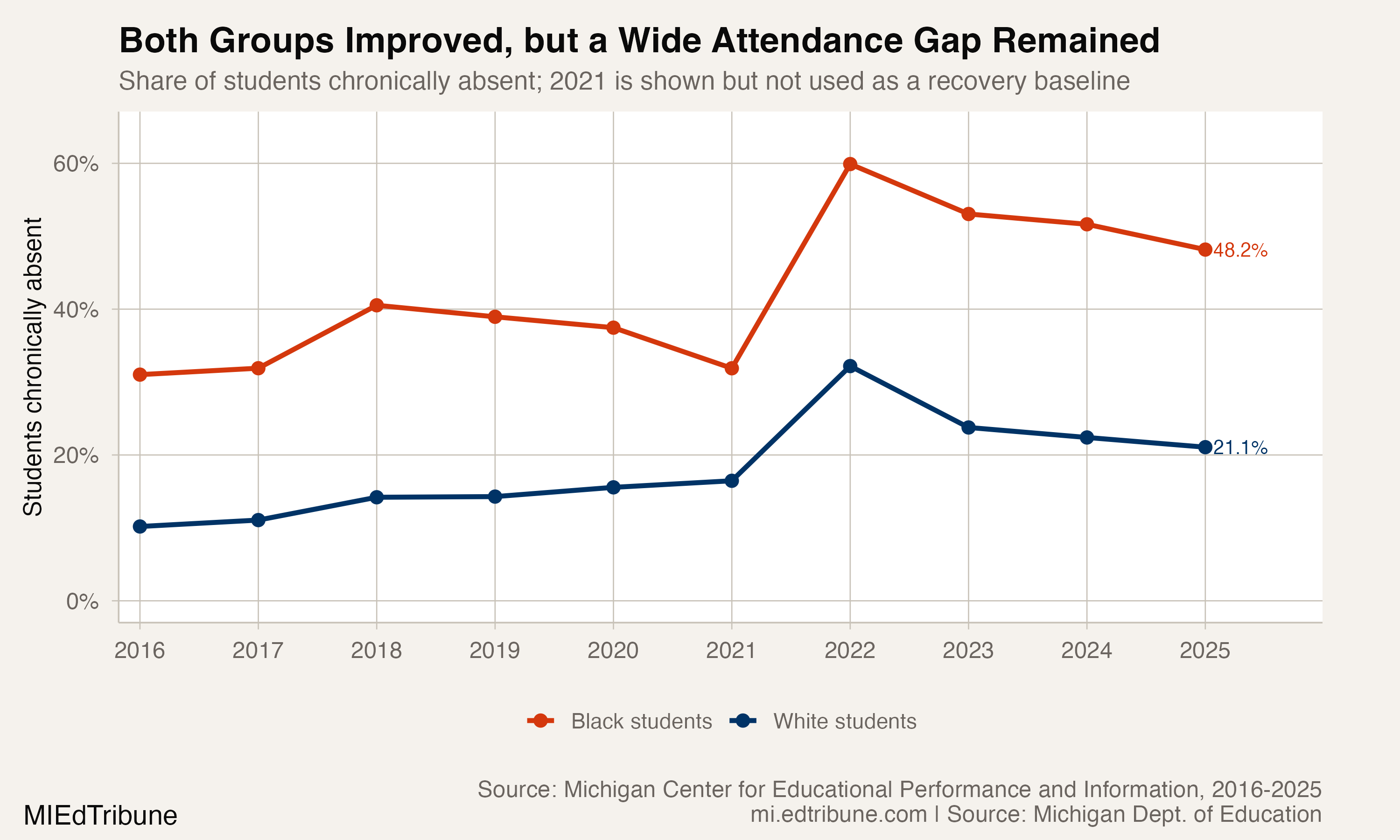
Michigan's Black student chronic-absence rate fell 11.7 percentage points from its 59.9% peak in 2022 to 48.2% in 2025. The improvement is substantial. The gap with white students, however, remains wider than before the pandemic.
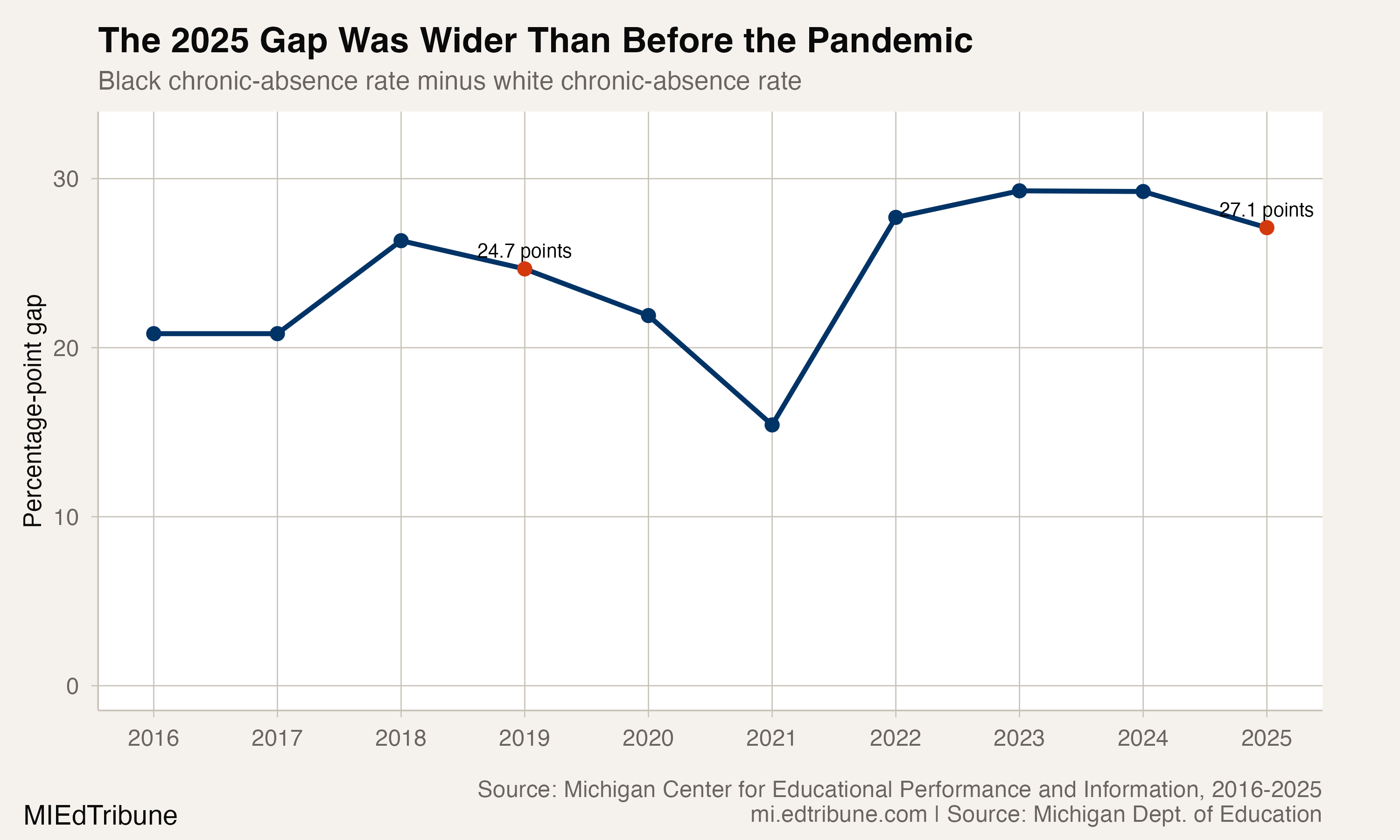
White students recorded a 21.1% chronic-absence rate in 2025. The resulting 27.1-point Black-white gap was 2.4 points wider than Michigan's 24.7-point gap in 2019.
The statewide difference appeared unevenly in large urban systems. Grand Rapids Public Schools↗ET reported a 55.5% rate for Black students and 25.2% for white students in 2025, a 30.3-point gap. The local gaps were 9.9 points in Detroit Public Schools Community District↗ET and 4.5 points in Lansing Public School District↗ET.
Improvement did not erase the older disparity
Both statewide rates declined after 2022. Black students' rate improved slightly more than white students' rate over that period, narrowing the gap from its pandemic-era peak. That movement does not change the longer comparison: the latest gap still exceeded its 2019 level.
Michigan's seven mutually exclusive race and ethnicity rows reconcile to the state's published total. In 2025, Black students represented 18.2% of enrollment but 31.5% of students counted as chronically absent.
Those shares describe concentration, not cause. The attendance file cannot show whether transportation, housing, health, family responsibilities, discipline, school climate or another factor produced the difference.
The Michigan Department of Education describes attendance as a multi-factor issue. Its latest statewide attendance release points to early-warning systems, family contact and efforts to remove barriers, but it does not attribute racial gaps to one mechanism.
One statewide gap, different local patterns
The three district comparisons show why a single statewide explanation would overreach. Grand Rapids' gap was larger than the state gap, while Detroit and Lansing had high rates for both groups and much smaller differences between them.
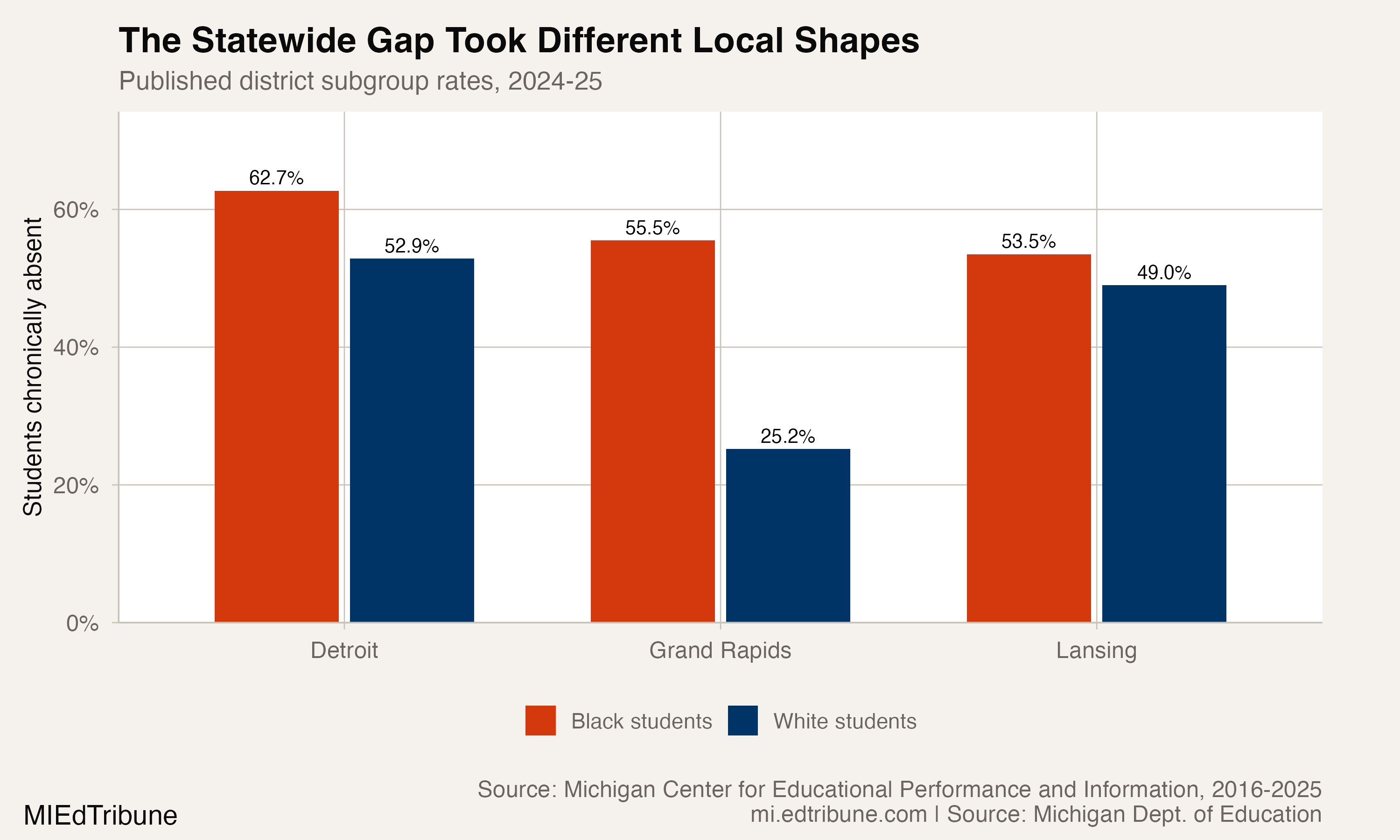
Grand Rapids Public Schools says reducing chronic absenteeism is part of its strategic work. The public aggregate data do not show which efforts reached which students, so the district's 30.3-point gap remains a question for local reporting rather than an answer in the statewide file.
Detailed code that reproduces the analysis and figures in this article is available exclusively to EdTribune subscribers.
Discussion
Sign in to join the discussion.
Loading comments...