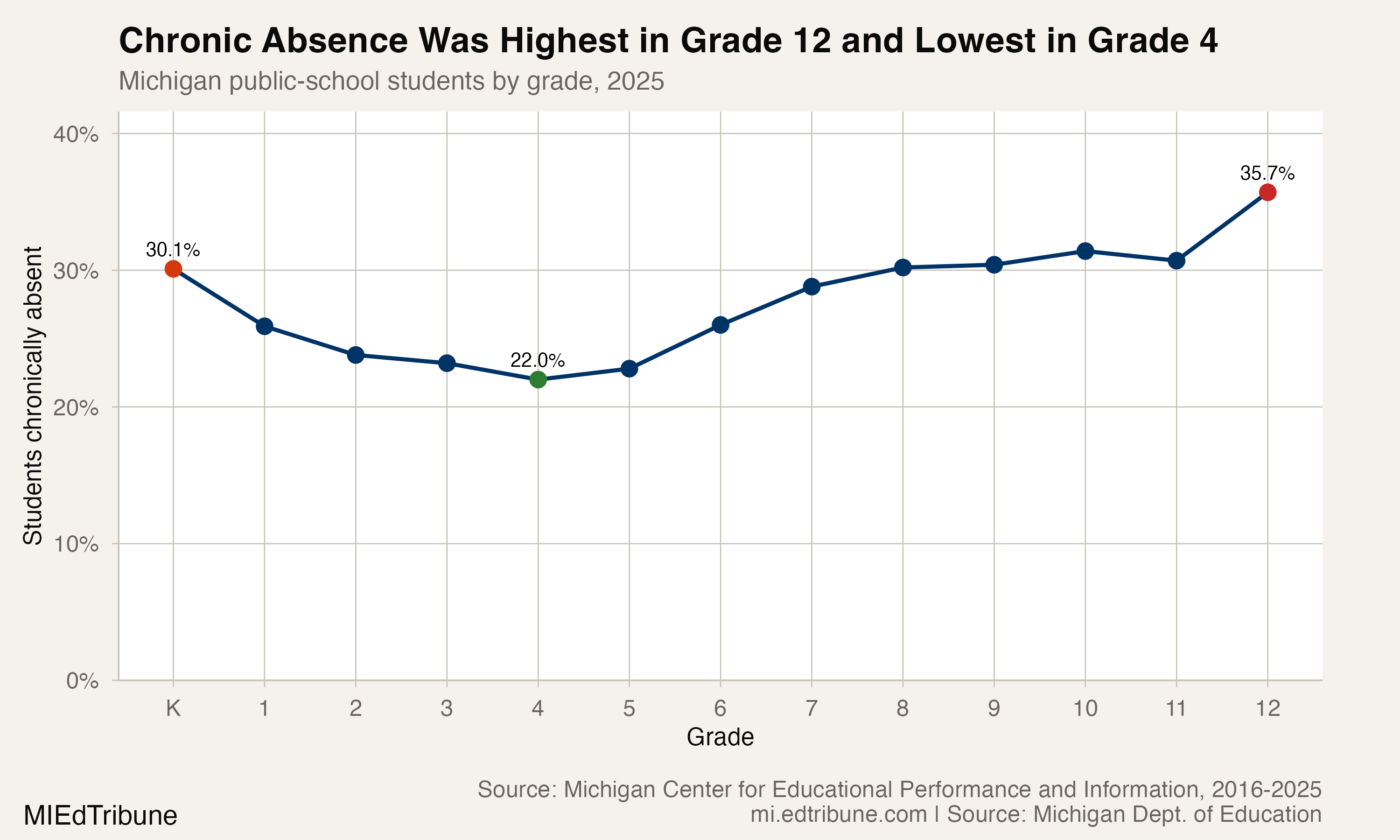
Michigan's chronic-absence rate was highest in grade 12 and lowest in grade 4 in 2025. Kindergarten formed a second high point at the other end of the grade span.
The grade 12 rate was 35.7%, covering 41,430 chronically absent students among 116,071 enrolled. Grade 4 was 22.0%, a 13.7-point gap from the senior rate.
Kindergarten's 30.1% rate was 8.2 points above grade 4 and exceeded every grade from 1 through 7. It represented 33,529 chronically absent children among 111,228 enrolled.
Two ends of the grade span
The senior result exceeded the gradual high school slope. Grade 12 stood 5.0 points above grade 11, the largest final step on the 2025 curve.
Calling that gap "senioritis" would go beyond the data. Michigan's aggregate records count absence for any reason; they do not identify whether illness, work, caregiving, transportation, disengagement or another factor produced a missed day.
The kindergarten result raises a different concern. Early-grade research summarized by Attendance Works treats chronic absence beginning in kindergarten as an early warning for later attendance and learning. That evidence supplies context for why kindergarten attendance matters; it does not explain Michigan's 2025 rate.
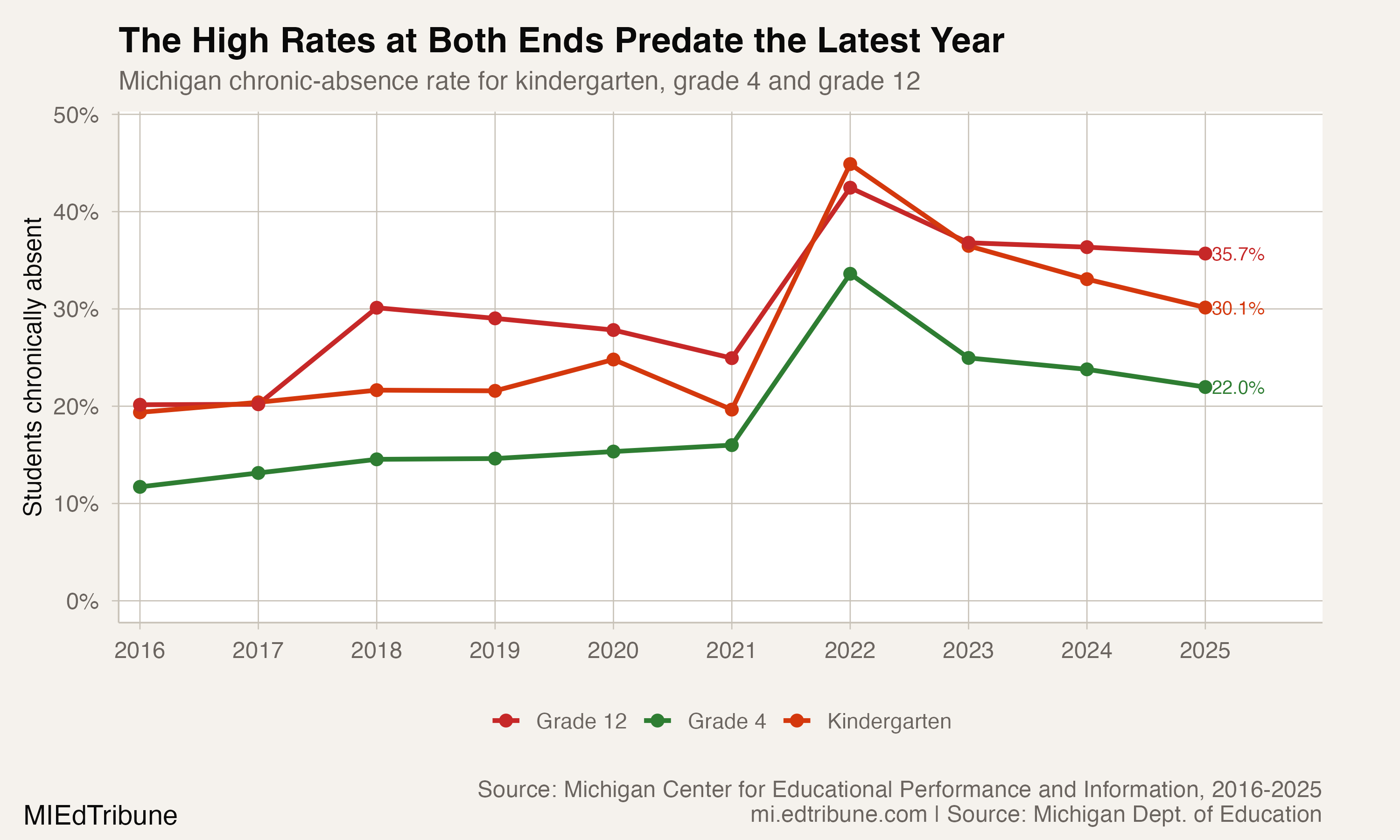
Grade 12 had Michigan's highest grade-level rate in eight of the 10 comparable reporting years from 2016 through 2025. Kindergarten was highest in the other two years, 2017 and 2022.
The pattern is therefore broader than one latest-year ranking. Grade 4 was not always the lowest grade, but the selected series show a recurring separation between the middle elementary years and both ends of the grade span.
Weighted bands clarify the slope
Combining grade counts produces a 24.7% chronic-absence rate for elementary grades K-5, 28.3% for grades 6-8 and 32.1% for grades 9-12.
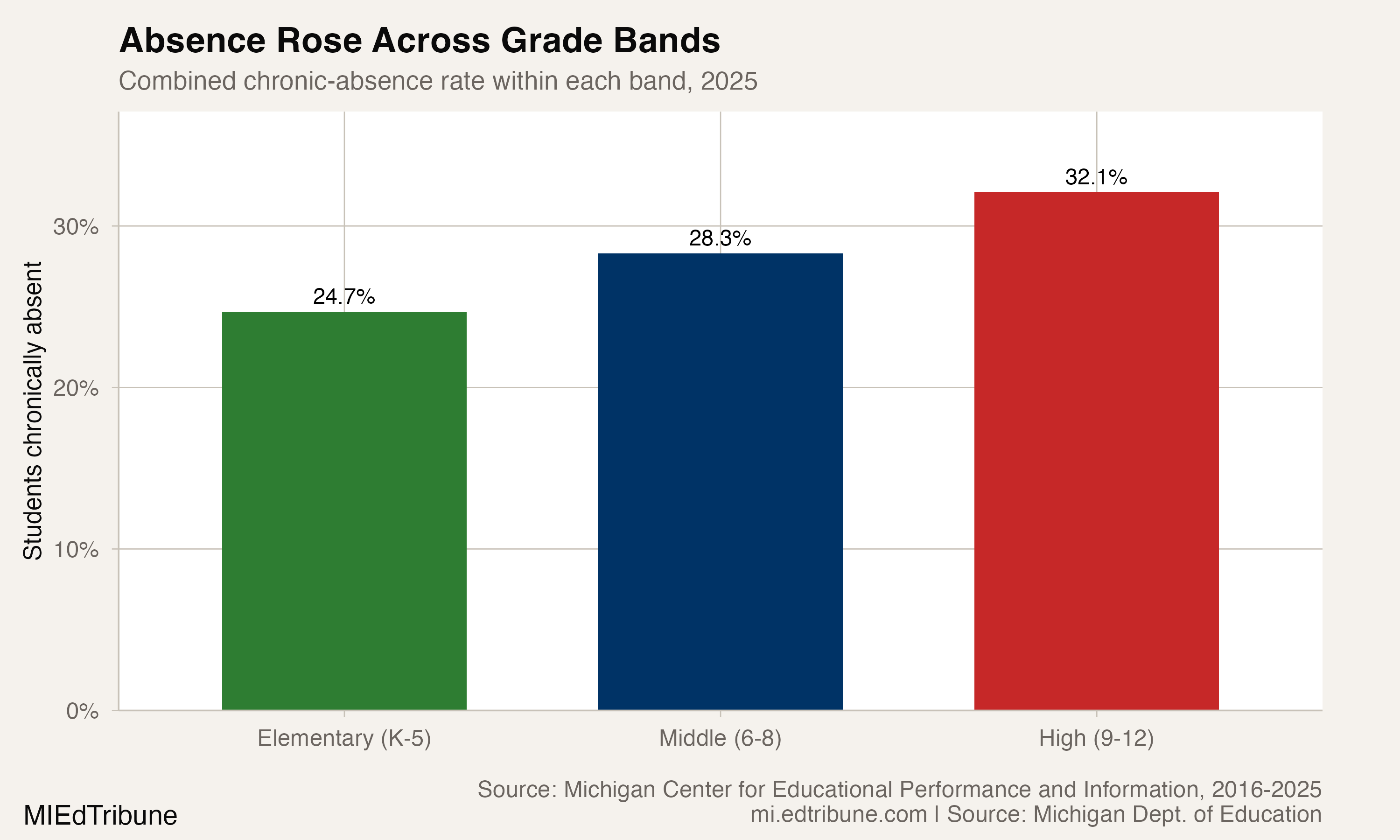
Those are weighted rates calculated from chronically absent and enrolled student counts within each band. They are not simple averages of the grade percentages, which would give a small grade the same influence as a large one.
The bands make the upward pattern visible, but kindergarten shows why a band average can hide an important grade. Its 30.1% rate sat well above the elementary band as a whole.
Michigan defines a student as chronically absent after missing at least 10% of possible school days, provided the student was enrolled for at least 10 consecutive days, according to the Michigan Department of Education. The threshold applies regardless of whether an absence is excused.
Detailed code that reproduces the analysis and figures in this article is available exclusively to EdTribune subscribers.
Discussion
Sign in to join the discussion.
Loading comments...