District Spotlight
Dearborn's 2025 Graduation Rate Was 93%, Seventh Among Large Districts
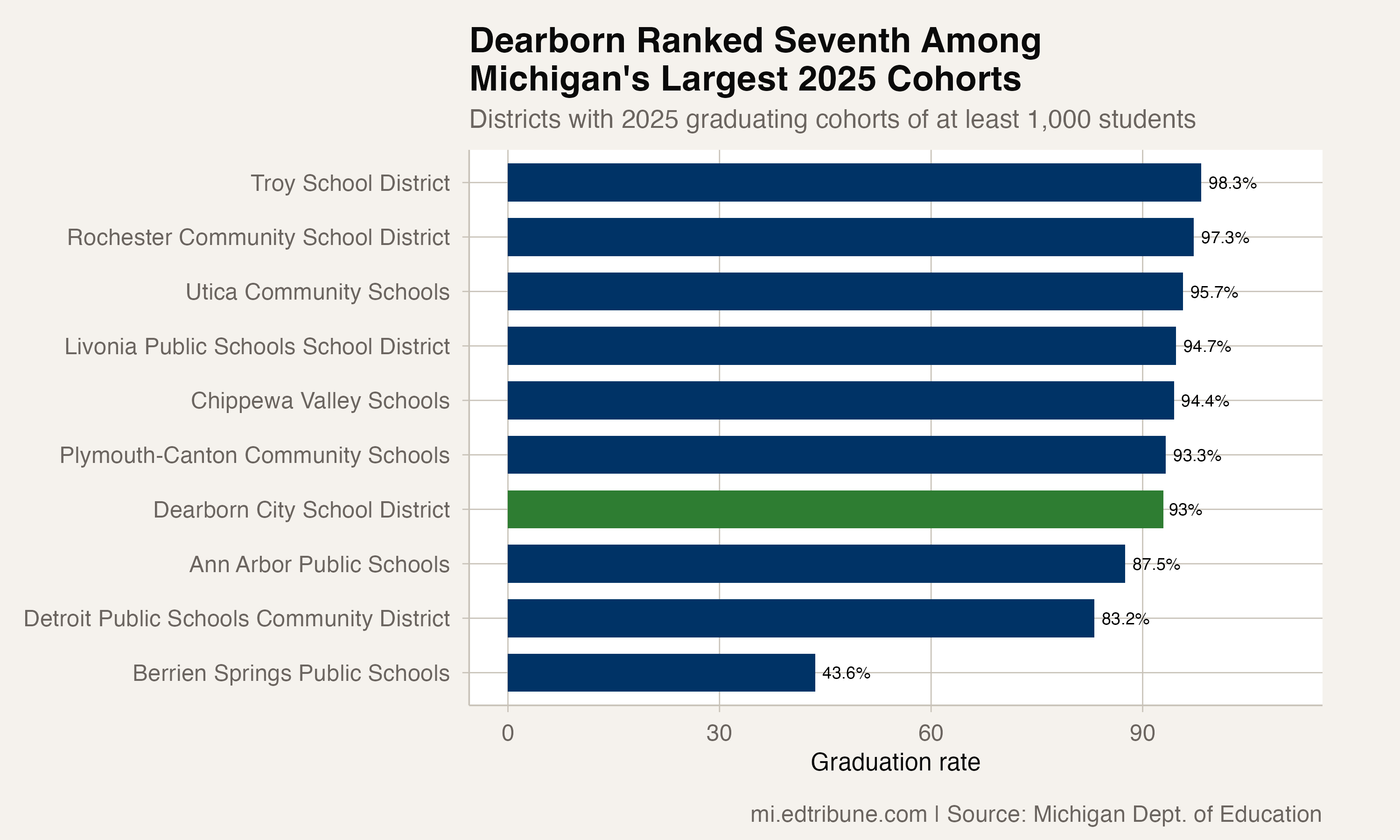
Dearborn City School District rose from 76.8% in 2007 to 93.0% in 2025, ranking seventh among Michigan districts with cohorts of at least 1,000 students.
Great Lakes State Education Coverage, Driven by Data
Education News & Data
Local education reporting from every corner of Michigan, grounded in Michigan Department of Education data.
Michigan reported 84.0% four-year graduation for the Class of 2025. Among 645 district reports with rates, 110 reached at least 95% and 97 were below 70%.
Flint’s 2025 graduation rate rose to 52.3%, while its cohort contained 174 students. Published observations show a large long-term cohort decline and a continuing state gap.
The Early Middle College graduation rate reached 88.7% in 2025 after four consecutive gains, while its cohort remained above 2018 but below its 2022 peak.
Michigan's Black-white graduation gap narrowed from 25.1 points in 2007 to 11.0 in 2025, while district results show progress remains uneven.
Dearborn City School District rose from 76.8% in 2007 to 93.0% in 2025, ranking seventh among Michigan districts with cohorts of at least 1,000 students.
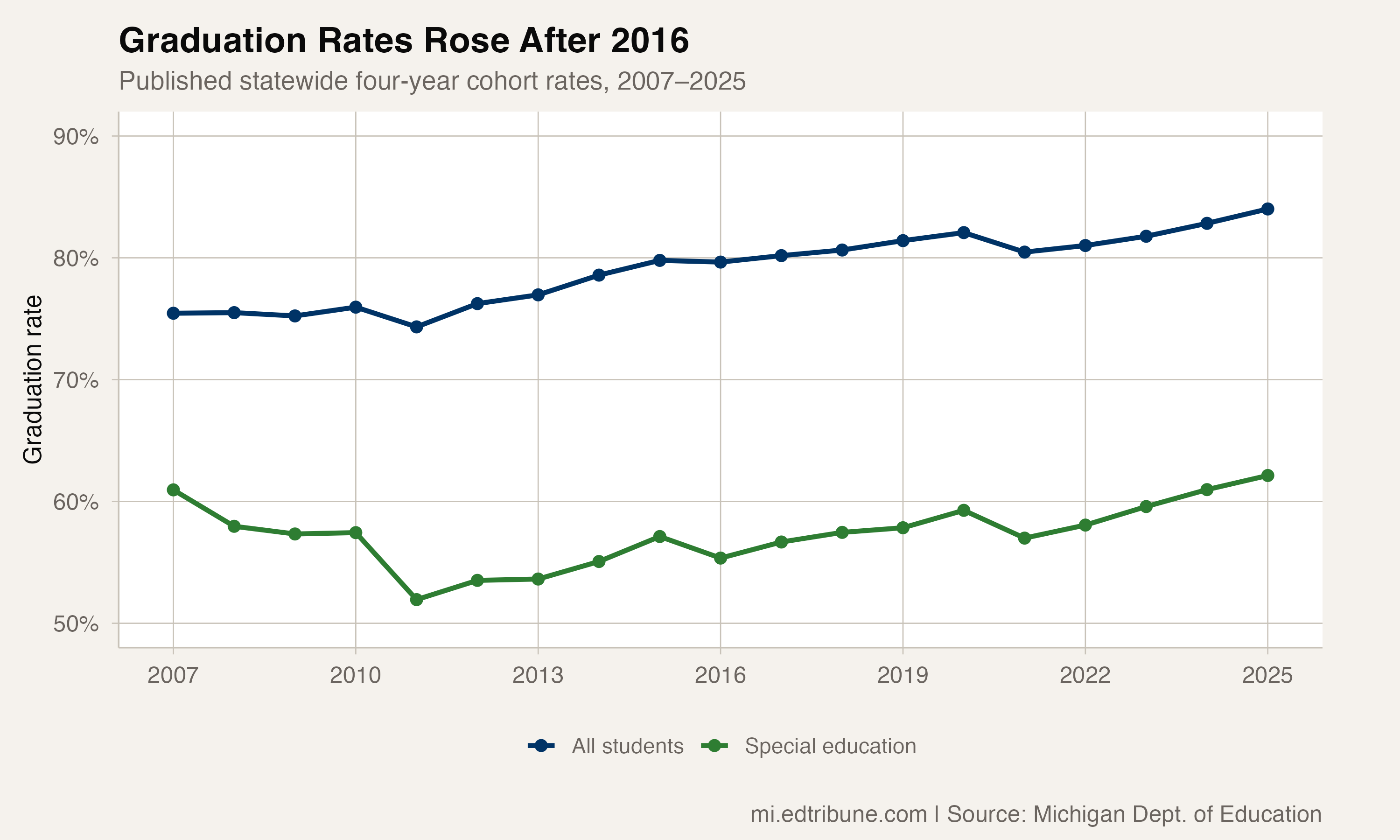
Michigan's special education graduation rate rose 6.8 points from 2016 to 2025, narrowing its gap with the statewide rate by 2.4 points.
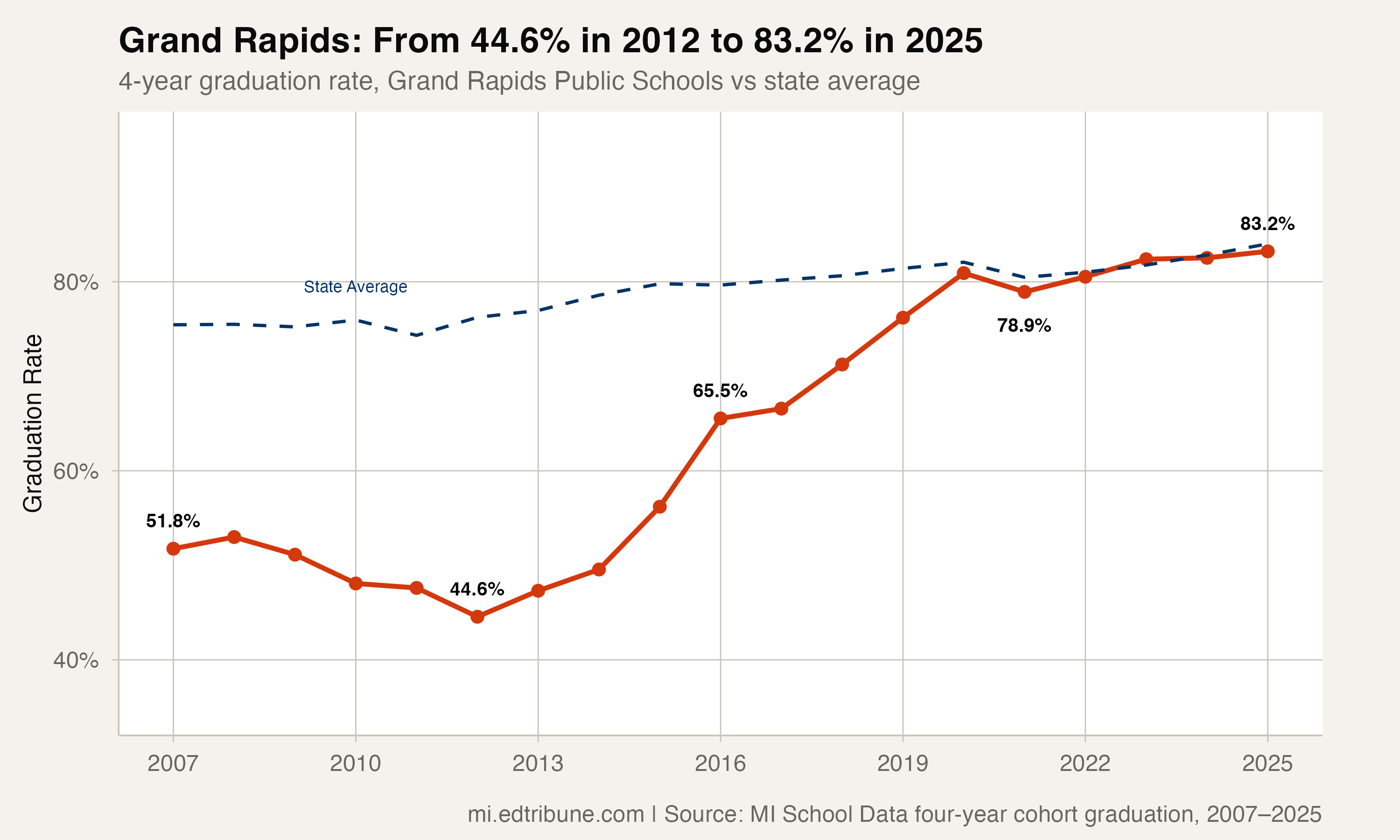
Grand Rapids Public Schools climbed from a 44.6% graduation rate trough in 2012 to 83.2% in 2025, matching Detroit and closing to within one point of the state average.
Kenowa Hills Public Schools' new superintendent is pairing deep district experience with a listening-first approach across a 6-campus system.
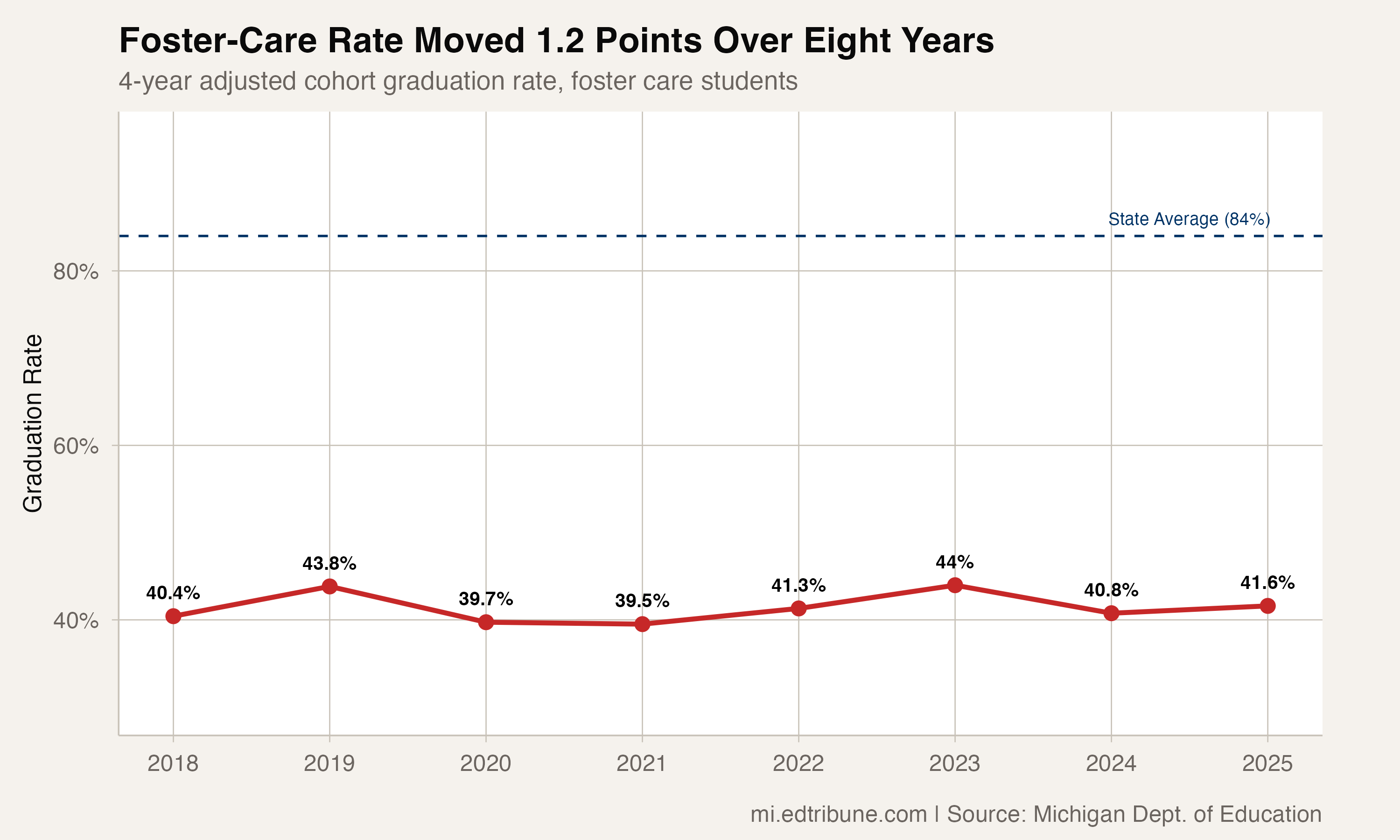
Michigan's all-students graduation rate rose 3.4 points from 2018 to 2025, while the foster-care rate rose 1.2 points to 41.6%.
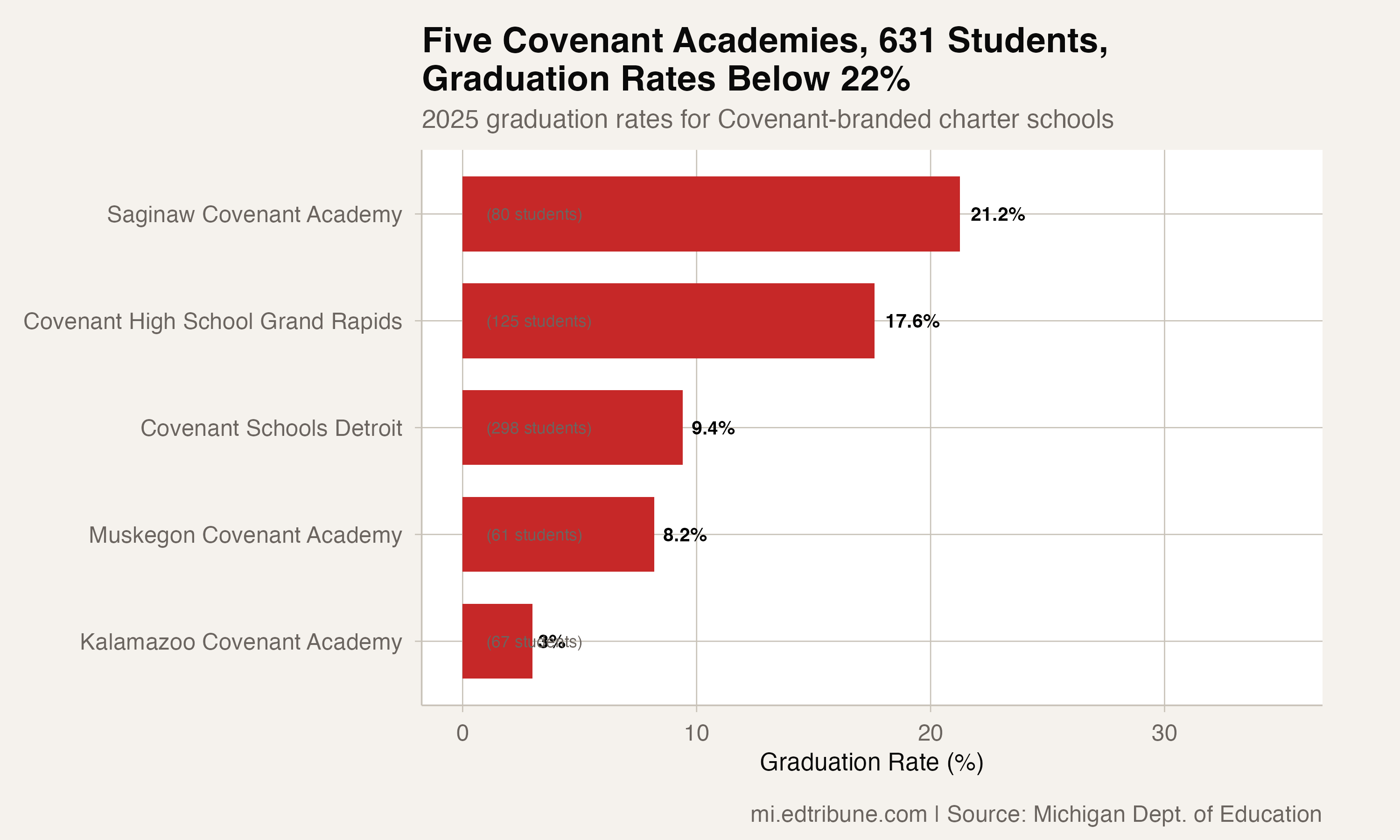
Michigan's 2025 file shows five Covenant-branded charter academies with a combined cohort of 631 and graduation rates from 3.0% to 21.2%.
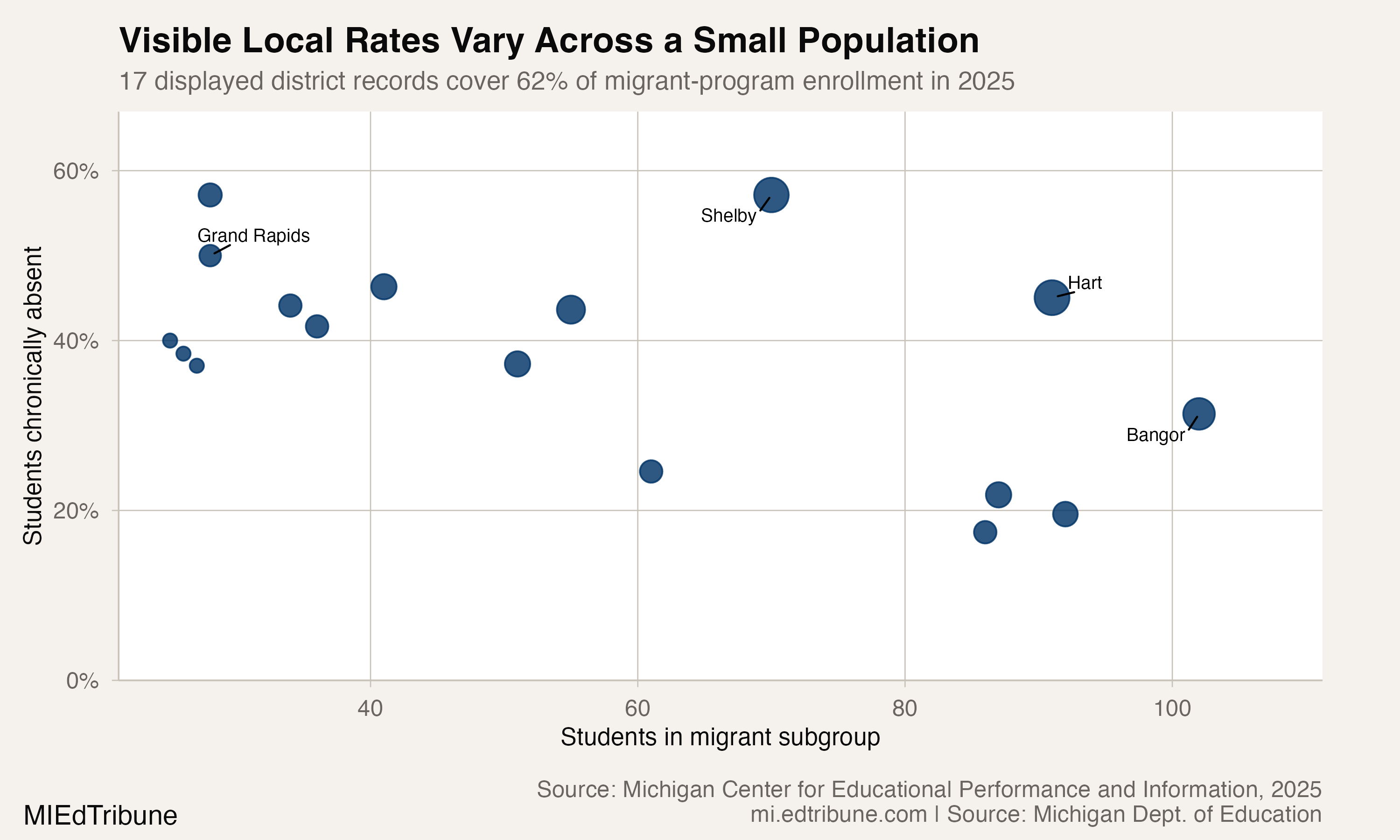
Michigan's migrant-program chronic-absence rate improved after 2022, but the gap with the statewide rate widened to 7.8 points.
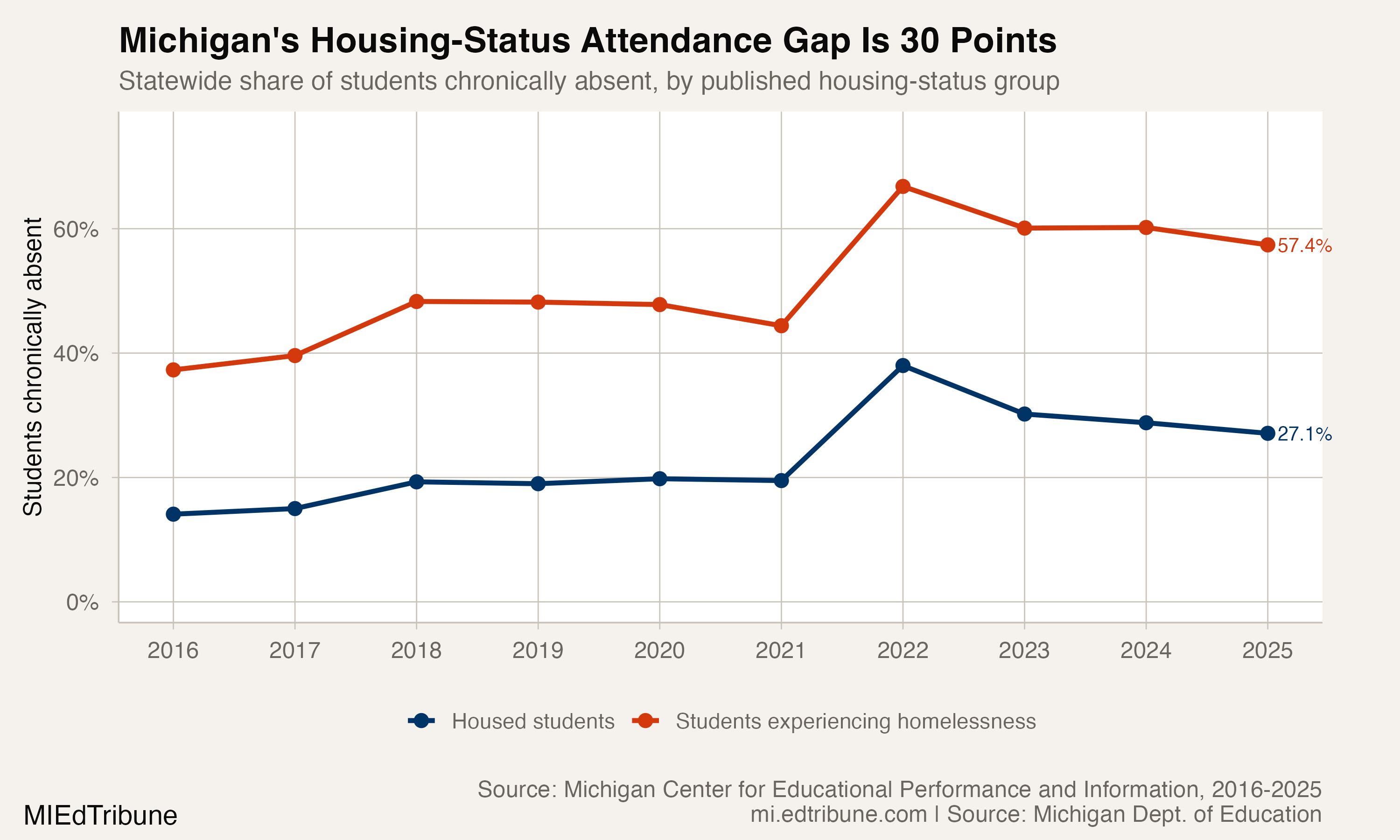
Michigan's chronic-absence rate improved for students experiencing homelessness, but the housing-status gap remained 30.3 points.
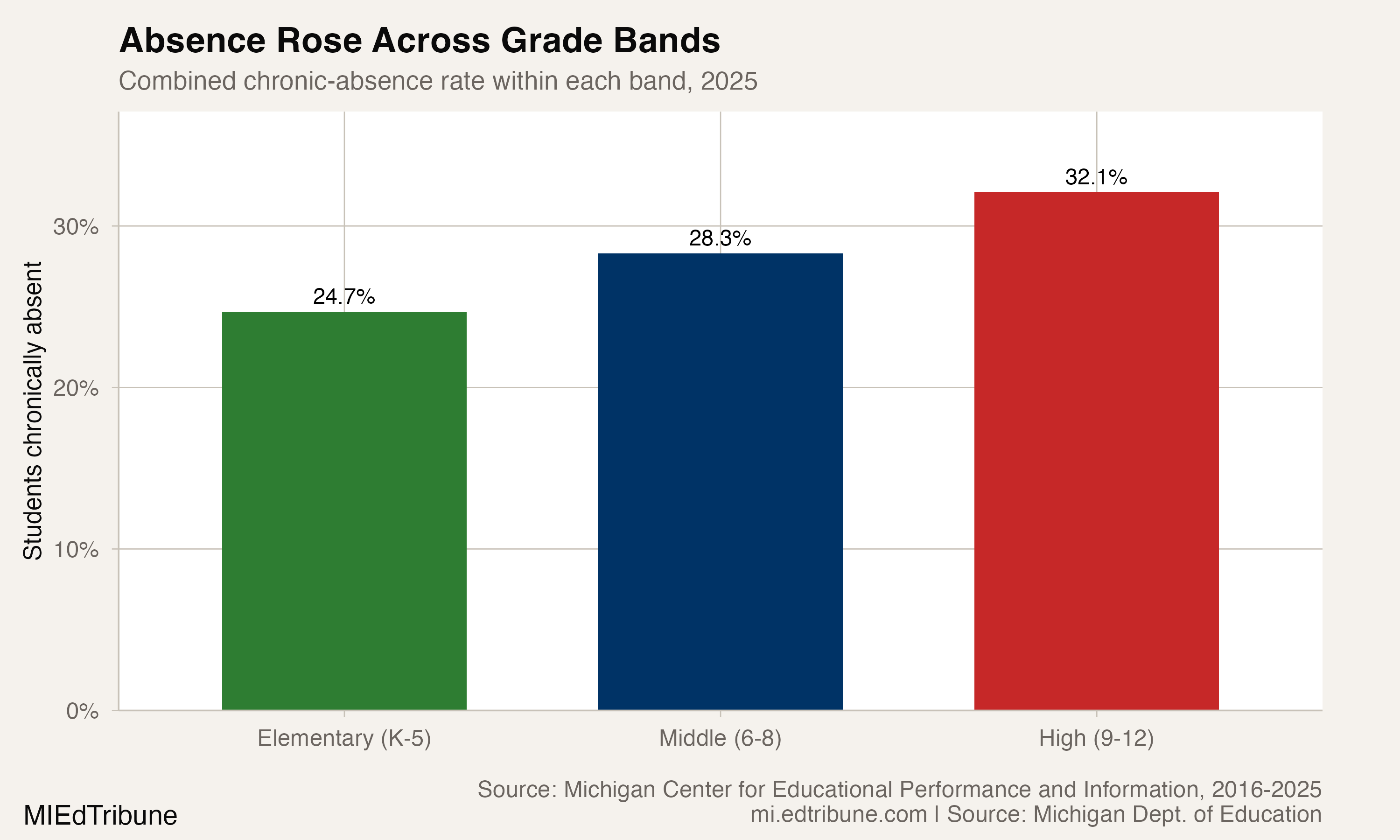
Michigan's 2025 chronic-absence rate was highest in grade 12 and lowest in grade 4, while kindergarten exceeded every grade from 1 through 7.
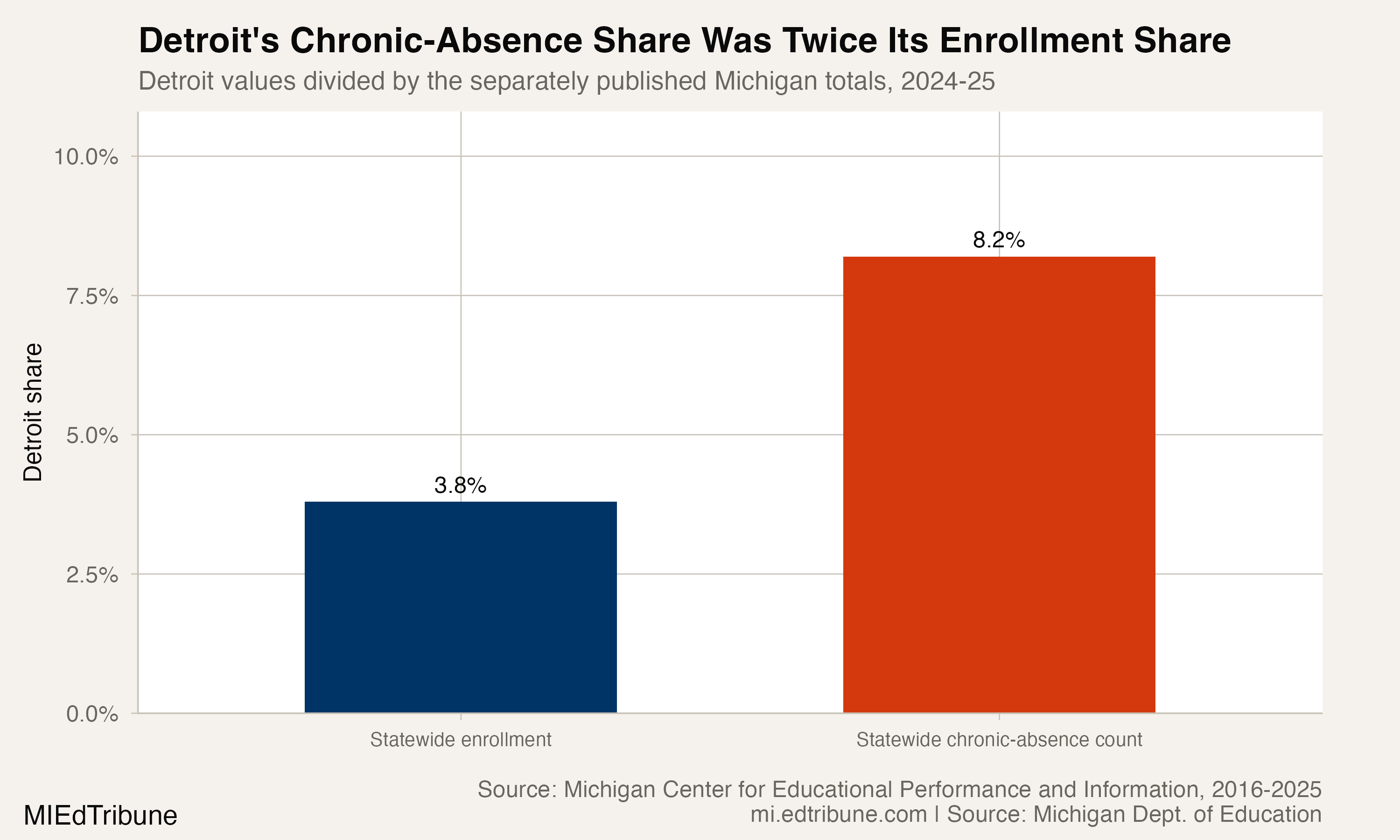
Detroit's chronic-absence rate has fallen for three years, but the district still reports an outsized share of Michigan's total.
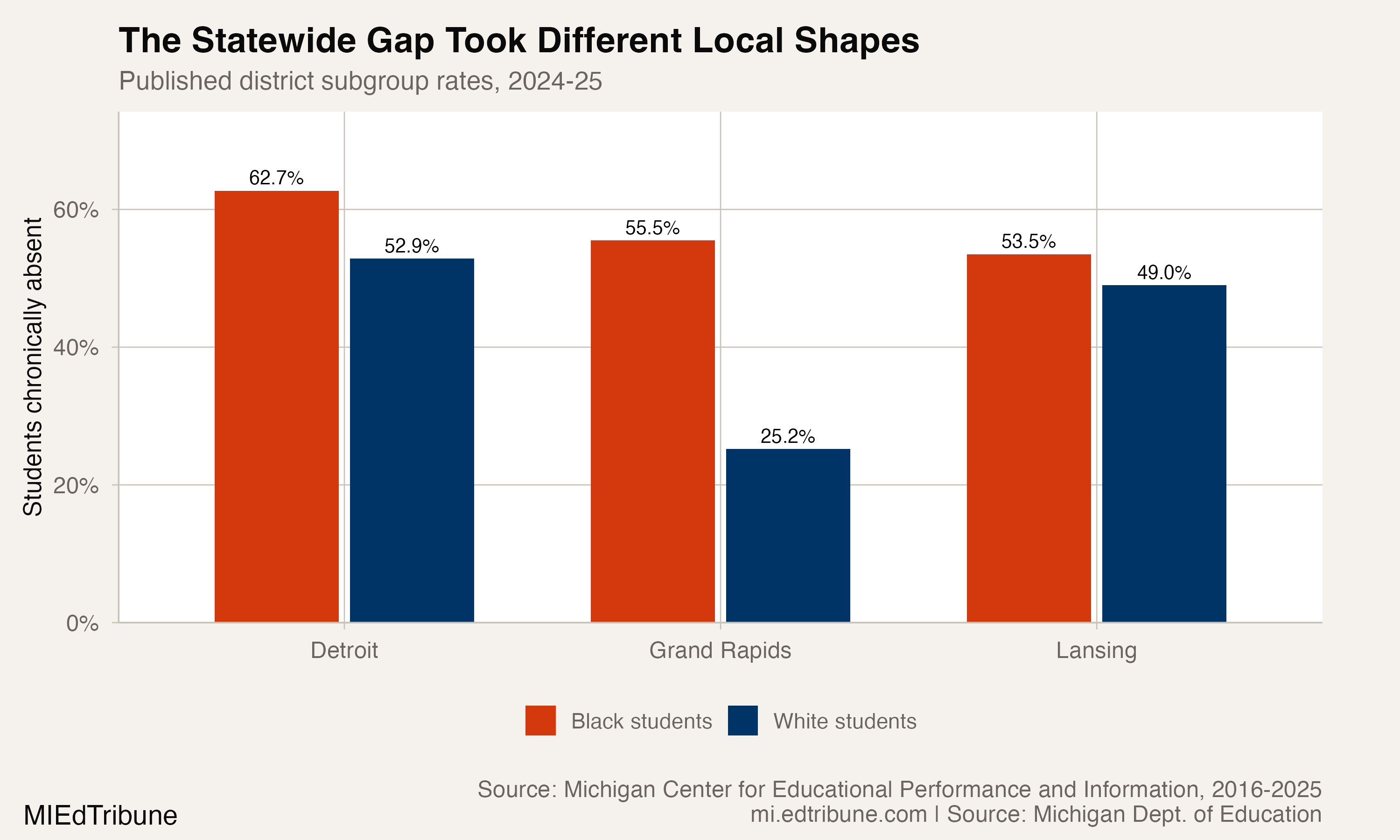
Black student attendance improved after 2022, but Michigan's Black-white chronic-absence gap remains wider than before the pandemic.